
Seoul Cafe Hopping Guide: Ikseon-dong and Anguk Bakeries & Cafes to Try
- Dec 13, 2025
- 9 min read
Updated: Dec 17, 2025
I’m starting a travel diary series for the trips I took around Asia right before (and around) my study abroad chapter in Japan. This entry is dedicated to cafe hopping in Seoul, South Korea, specifically the neighborhoods where you can bounce between hanok streets, tiny alleys, and bakeries that look genuinely stunning.

I took this trip solo after months of working and saving up, coincidentally at a Korean mom-and-pop restaurant. Seoul also felt like an easy addition to my itinerary because it’s close to Japan, so flights were relatively affordable when booked in advance. I had always wanted to visit South Korea after growing up watching K-dramas with my mom and sister, and, of course, I came with a very serious pastry mission.
Here are the cafes and bakeries I visited in Seoul, what I ordered, what I’d get again, and what I wish I did differently (because yes, I over-ordered).
Table of Contents

Why Ikseon-dong and Anguk are perfect for cafe hopping
My Seoul cafe hopping route (map links included)
The cafes: what I ordered and honest notes
Solo traveler tips (how to pace yourself)
Mini culture notes: coffee, sweet potato lattes, and salt bread
Quick FAQ
Why I Recommend Ikseon-dong and Anguk for Seoul Cafe Hopping
If you’re looking for Seoul cafe aesthetic with real neighborhood character, Ikseon-dong was my favorite area to wander through. I was immediately charmed by its narrow alleys and clusters of hanok buildings, traditional Korean homes that have been thoughtfully repurposed into restaurants, shops, and cafes.
While researching the area, I learned that Ikseon-dong is often described as one of Seoul’s oldest “urban hanok” neighborhoods, originally developed in the 1920s.

Anguk sits just nearby and makes a perfect pairing for a cafe hopping day. You can easily move from palace-area sightseeing to hanok cafes without feeling like you’re commuting across the city.
My Seoul Cafe Hopping Route
A quick note before you start planning: I realistically did about two cafes a day, which was all my stomach could handle while solo traveling in Seoul. You can follow this as a half-day route or stretch it across a full day if you’re the “one pastry per hour” type. Koriko Cafe is a bit farther from the other stops, so I’d recommend saving it for a separate day on your Seoul itinerary.
Neighborhood base: Anguk and Ikseon-dong (Jongno area)

Stops and map links
Insa-dong Culture Street: https://maps.app.goo.gl/hgJu455zuDq6c9nz5
Ikseon-dong Hanok Village: https://maps.app.goo.gl/aP99T44XR2U4bYPA6
Cafe Onion Anguk (see below)
Appiforet: https://share.google/Jd5NpLda6eLFm9znI
Soha Salt Pond Ikseon-dong (salt bread): https://maps.app.goo.gl/MFXDDahZXqN62wdC8
Cafe Layered Bukchon: https://maps.app.goo.gl/hNLtc9q6SmxM5c9N9
Koriko Cafe: https://maps.app.goo.gl/VYYXxsWpNSqz5pJN9
Hanok Langsom Ikseon (walk-by): https://maps.app.goo.gl/fppKMyxUxF75KmeZ7
The Cafes (What I Ordered and My Honest Notes)
Cafe Onion Anguk (the hanok cafe moment)
Out of everywhere I went, this was the best experience, even more memorable than Koriko.
While Koriko impressed me with its interior decor, sitting inside a hanok cafe felt truly special and grounding.

This Cafe Onion location is widely described as being set inside a hanok dating back to the 1920s, with many traditional architectural features preserved.
A quick heads-up: it’s popular, and there may be a line. I went alone, and a seat opened up after about 15 minutes.
My order
Drink: Almond Milk Latte
Pastry: Spicy squid ink bread with 3 or 4 kinds of cheese, and a spicy cheese hot dog pastry. Lowkey hurt my stomach but if you can handle your lactose go for it!
Would I get it again? Yes, absolutely
Best part: the courtyard, the atmosphere, and the unmistakable “this is Seoul” feeling
Cafe Layered Bukchon (scone heaven with friends)

This visit happened on a return trip to Seoul with two friends I met during my study abroad program, which automatically made everything taste better.
What we had
Earl Grey scone
Pretzel scone
Plain scone (I think)
One topped with apricot jam and a slab of butter, which was extra cute
Thoughts: Everything was delicious, and the selection is genuinely dangerous if you have no self-control.
Koriko Cafe (Kiki's Delivery Service Cafe)
Koriko was a full experience. It’s the kind of place that feels like a carefully styled house, because it basically is one.
What I ordered
Iced strawberry milk with foam, which was genuinely so good
A sweet potato baked cup thing, also very good





Notes: The cafe is beautifully decorated, with an upstairs that gets a generous amount of natural light and a spacious downstairs that feels calm and open. I found it a little hard to locate at first, but Google Maps is your friend, and once you’re inside, you realize how large it actually is. There’s also a small gift shop tucked inside, and I ended up grabbing postcards, stickers, and folders, all of which I still use today.
Appiforet (good latte, mild chaos)

This cafe was fun, slightly chaotic, and memorable for reasons beyond the drinks. I did, in fact, smack my head on a hanging monkey at one point.
What I ordered
Purple sweet potato latte
Notes: The latte tasted great, but it was quite filling. In hindsight, it wasn’t the best choice as a second stop, especially right after visiting Soha Salt Pond. Still, it was a cozy spot with personality, just one I’d probably space out a bit more next time.
Soha Salt Pond Ikseon-dong (salt bread and fizzy drink opinions)
This stop was visually stunning. The cafe features an actual salt pond in the middle of the space, which immediately sets the tone. Presentation across the board was a solid 10/10.

What I ordered
Salted strawberry lemonade, very fizzy
Salt bread, buttery with a perfect texture
Two additional pastries
My honest ratings
Salt bread: 10/10 for consistency and flavor
Drink: 6/10, I wanted more strawberry flavor
Other pastries: 6/10, pretty and enjoyable, but I was hoping for more filling in the croissant cube
Cafe Highwaist Ikseon (I didn’t eat, but I had to see it)

By this point, my stomach was full, but my eyes still had room.
I walked into Cafe Highwaist because I had seen it all over Instagram, and it lived up to the hype visually. The setup is incredibly cute, and each dessert is displayed with so much care that it reminded me of a classic English bakery.
What I’d do next time: Visit earlier in the day when I’m not already pastry-saturated, because this is absolutely a place worth saving your appetite for.
Personal Recommendations for Cafe Hopping in Seoul (Especially if You’re Solo)
If you’re cafe hopping in Seoul on a solo trip, pacing matters more than you think. Unless you have an unusually large appetite for sweets and baked goods (which I thought I did), it’s genuinely hard to visit more than two cafes in one stretch.

I recommend ordering one item at a time: one drink and one pastry or dessert, then giving yourself a long walk before the next stop. Ikseon-dong and Anguk are perfect for this because wandering the alleys, browsing shops, and people-watching naturally builds in breaks.
I made the mistake of ordering two to three items plus a drink at nearly every stop, which filled me up by the first cafe. I ended up carrying leftovers for the next two days. Not the worst problem to have, but definitely something I’d do differently next time.
If you’re traveling with friends or family, cafe hopping becomes much easier. Sharing pastries means you can try more places without burning out. Solo, slow and steady really does win here.
Neighborhood Notes: Anguk and Ikseon-dong, Seoul’s Hanok-Style Area

Anguk and Ikseon-dong quickly became some of my favorite areas in Seoul. These neighborhoods balance history and modern life in a way that feels effortless. Hanok buildings, traditional Korean homes with tiled roofs and wooden beams, are woven into daily city life as cafes, restaurants, and boutiques.
Ikseon-dong in particular is often described as one of Seoul’s oldest urban hanok neighborhoods, originally developed in the 1920s. Walking through it feels intimate and lived-in, not overly polished or museum-like. You’ll turn a corner and suddenly find a beautifully styled cafe, then another alley that feels residential and quiet.
Anguk sits just nearby and makes the transition seamless. You can go from palace sightseeing to coffee and pastries without feeling like you’re hopping neighborhoods. For cafe hopping in Seoul, this area is ideal because everything feels close, walkable, and layered with character.
Mini Culture Notes I Found Interesting Along the Way
When Did Cafes and Bakeries Become So Popular in Seoul?

Coffee has been part of Korean history since the late 19th century, but cafes as we know them today evolved gradually. Early coffeehouses existed in the early 1900s, followed by the rise of traditional “dabang,” which were casual coffee shops popular through much of the 20th century.
What really shaped modern cafe culture was the late 1990s and early 2000s, when coffee chains expanded rapidly, and cafes became lifestyle spaces rather than just places to drink coffee. By the 2010s, cafes in Seoul weren’t only about caffeine; they were about design, desserts, and experience. That shift explains why cafe hopping feels like an activity in itself today.
Purple Sweet Potato Drinks and Why They’re Everywhere
Sweet potatoes, especially purple sweet potatoes, hold a strong place in Korean food culture. They’re associated with comfort, warmth, and nostalgia, often eaten roasted during colder months or sold by street vendors.

Seeing them turned into lattes and desserts suddenly made sense to me. A purple sweet potato latte isn’t just a novelty drink, it’s familiar, filling, and slightly nostalgic. That’s probably why so many cafes include sweet potato flavors alongside coffee and tea.
Coffee Culture in Korea
Coffee became truly everyday in Korea through instant coffee mixes, which made it affordable and accessible to more people. Over time, cafes evolved into social spaces, study spots, and creative hubs.
That cultural shift is why cafes in Seoul often feel intentionally designed to linger in. You’re encouraged to sit, take photos, read, journal, or simply exist for a while. As someone who keeps travel diaries and journals, that aspect really resonated with me.
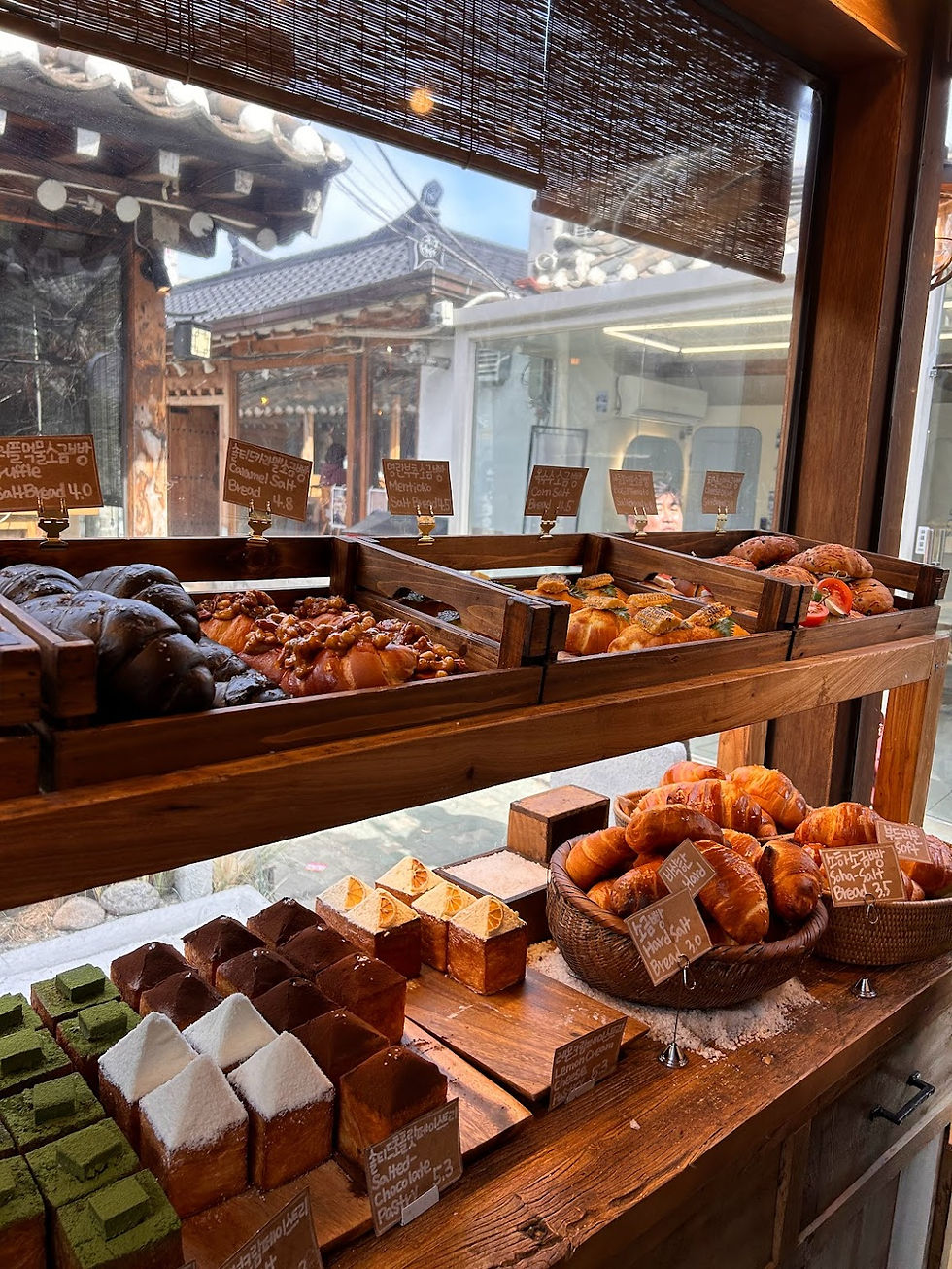
The Salt Bread Craze
Salt bread, known as sogeum-ppang in Korea, has roots in Japanese shio-pan. It’s simple: buttery dough with a salty finish, crisp on the outside and soft on the inside.
I had been watching cafe and bakery vlog-style videos from Korea and Japan since high school, usually during late-night insomnia moments. Salt bread showed up constantly in those videos, so tasting it in person felt oddly full-circle. Simple, comforting, and very easy to understand why it became so popular.
FAQ
Is Ikseon-dong good for cafe hopping? Yes. Ikseon-dong is one of the best areas in Seoul for cafe hopping because of its dense layout, walkable alleys, and mix of hanok-style cafes and modern bakeries.

How many cafes can you realistically visit in a day?
Solo, two to three cafes is realistic if you want to enjoy each stop. With friends and shared orders, you could visit more.
Do you need reservations for popular cafes?
Most cafes don’t take reservations, but popular spots like Cafe Onion can have lines. Going solo or visiting on weekdays helps.
Closing Thoughts
Cafe hopping in Seoul ended up being one of my favorite ways to experience the city. It let me slow down, observe daily life, and connect with Seoul through food and atmosphere rather than rushing between landmarks.

If you’re planning a trip, I hope this guide helps you map out your own cafe hopping route or at least gives you a few stops worth saving. And if you’re anything like me, remember: pace yourself, your eyes will always want more than your stomach can handle.
If you want the broader version of this trip, including solo travel logistics and how I planned my days in Seoul, I’ll be sharing that in a separate post soon.
Works Cited
Asia Society. “The Mood for Coffee: How Coffee Became Popular in Korea.” Asia Society, https://asiasociety.org/korea/mood-coffee.
Food52. “Sea Salt Butter Rolls (Shio-Pan).” Food52, https://food52.com/recipes/89370-sea-salt-butter-rolls.
Seoul Metropolitan Government. “Insa-dong Cultural Street.” Hanok Seoul, https://hanok.seoul.go.kr/front/eng/town/town03.do.
Shape the Trip. “Ikseon-dong Hanok Village, Seoul.” Shape the Trip, https://shapethetrip.com/korea-seoul-ikseondong-hanok-village.
Specialty Coffee Association. “Love at First Sip: A History of Coffee in Korea.” Specialty Coffee Association, https://sca.coffee/sca-news/25/issue-16/love-at-first-sip-a-history-of-coffee-in-korea.
Wikipedia contributors. “Roasted Sweet Potato.” Wikipedia, The Free Encyclopedia, https://en.wikipedia.org/wiki/Roasted_sweet_potato.


Comments